

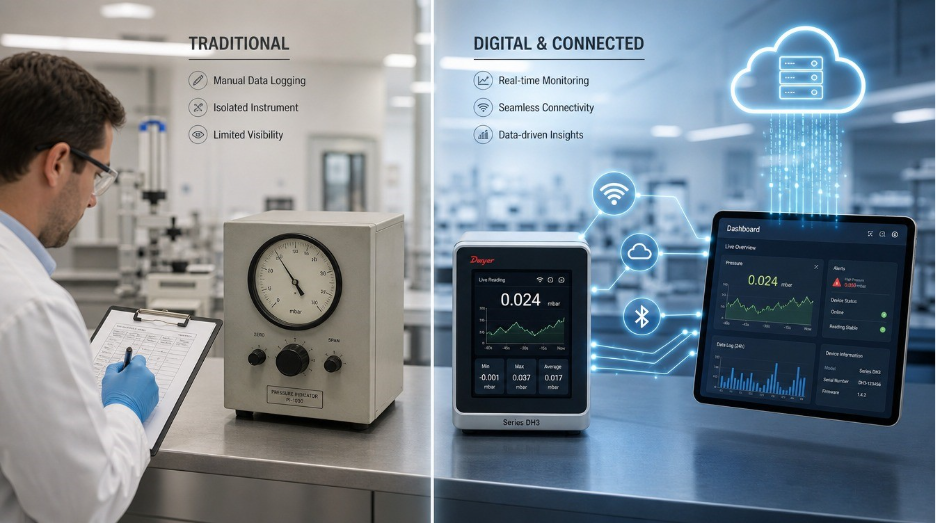
Science laboratories across industries are increasingly adopting digital technologies to improve efficiency, accuracy, and data management. From pharmaceutical companies to academic research facilities, the shift toward connected, intelligent systems is reshaping how work gets done.
Lab digitalization refers to integrating digital tools, IoT sensors, cloud connectivity, and automation into laboratory instruments and workflows. It goes far beyond simply adding computers to old processes, it’s about creating intelligent, interconnected systems that collect, analyze, and share data automatically.
Many B2B buyers still view science instruments as standalone hardware without considering digital capabilities. This can lead to purchasing equipment that is harder to integrate with modern systems or more difficult to adapt as data, compliance, and workflow requirements evolve.
This guide explains what lab digitalization is, why it matters for B2B buyers, and how choosing digitally-enabled scientific laboratory instruments can give your organization a competitive edge. By the end, you’ll know exactly what digital features to look for when purchasing your next lab equipment.
Understanding Lab Digitalization: More Than Just Computers
Lab digitalization means integrating digital technologies into laboratory instruments and workflows to collect, analyze, and share data automatically. It transforms traditional science laboratories into intelligent, connected environments where data flows seamlessly between instruments, software systems, and people.
This goes beyond simple computerization to include:
- IoT connectivity for real-time monitoring and alerts
- Cloud-based data storage enabling collaboration across locations
- AI-powered analytics providing predictive insights and pattern recognition
- Automated workflows reducing manual entry and human error
Key Components of Digital Labs
Connected Instruments: Modern science instruments come equipped with Ethernet, Wi-Fi, or Bluetooth connectivity, allowing them to communicate with other systems in real time.
Data Management Systems: Laboratory Information Management Systems (LIMS) and Electronic Lab Notebooks (ELN) organize and track data from all your laboratory instruments.
Automation: Robotic sample handling, automated calibration, and smart scheduling reduce technician workload while improving consistency.
Analytics: Real-time dashboards, trend analysis, and predictive insights help you make better decisions faster.
Remote Access: Monitor scientific laboratory instruments from anywhere via cloud platforms, enabling flexible work arrangements and 24/7 oversight.
Compare traditional science laboratories to digital labs:
| Traditional Lab | Digital Lab |
| Manual data entry | Automatic data capture |
| Paper records | Digital audit trails |
| Isolated instruments | Interconnected systems |
| Reactive maintenance | Predictive maintenance |
The difference is clear: digital labs work smarter, not harder.
5 Reasons Digitalization Matters for B2B Lab Buyers
Reason 1: Improved Data Accuracy & Compliance
Manual data entry in science laboratories can introduce transcription mistakes, inconsistent records, and avoidable compliance risks. In regulated environments, even small documentation errors can create rework, delays, or audit issues.
Digital laboratory instruments automatically capture data, eliminating transcription errors. Built-in audit trails help meet stringent regulatory requirements. This is critical for pharmaceutical, food safety, and clinical testing labs where compliance is non-negotiable.
Reason 2: Cost Savings Through Efficiency
Automated workflows can reduce the time technicians spend on repetitive tasks and improve visibility into instrument status. Digitally enabled scientific laboratory instruments may also support real-time monitoring, helping teams respond faster to issues and reduce unplanned downtime.
Reduced consumable waste through precise automation means lower operating costs. Faster turnaround times translate to more tests per day and higher revenue, directly impacting your bottom line.
Reason 3: Better Decision-Making With Real-Time Data
Live dashboards show performance metrics across all laboratory instruments, giving you a complete picture of lab operations. Trend analysis identifies patterns invisible in manual records, helping you spot issues before they become problems.
Predictive analytics alert you to calibration needs before failures occur. Data-driven decisions improve science laboratories ROI by optimizing resource allocation and preventing costly mistakes.
Reason 4: Remote Monitoring & Flexibility
Monitor science instrument performance from your office or home, enabling flexible work arrangements. Receive instant alerts when parameters go out of range like temperature, pressure, pH, or critical metric.
This capability is ideal for 24/7 operations, multi-site labs, or disaster recovery planning. It’s also critical during remote work trends that accelerated post-pandemic, allowing your team to stay productive regardless of location.
Reason 5: Future-Proofing Your Investment
Digital scientific laboratory instruments are often better positioned to work with newer software, analytics platforms, and connected workflows. By avoiding equipment that cannot connect to modern systems, buyers can make purchasing decisions that are easier to support and expand over time.
In some cases, software updates can add features or improve usability without requiring immediate hardware replacement. Connected laboratory instruments may also remain easier to support, integrate, and maintain as operational needs change.
Essential Digital Capabilities in Modern Laboratory Instruments
Connectivity Features
When evaluating science instruments, check for these connectivity options:
Wired: Ethernet, USB, RS-232, RS-485 ports for reliable, high-speed data transfer
Wireless: Wi-Fi, Bluetooth, NFC for mobile integration and flexible placement
Industrial protocols: Modbus, OPC-UA for factory or production line integration
Always verify compatibility with your existing network infrastructure before purchasing.
Data Management Capabilities
Look for laboratory instruments that offer:
- Automatic data logging with precise timestamps
- Export formats: CSV, XML, JSON, PDF for reports and analysis
- API access for integration with LIMS or ERP systems
- Cloud sync options (AWS, Azure, Google Cloud) for secure, scalable storage
These features ensure your data flows smoothly into existing workflows.
Smart Instrument Features
Modern scientific laboratory instruments include built-in intelligence:
Self-calibration: Automated calibration reminders or execution reduces technician workload
Self-diagnostics: Error detection and troubleshooting guidance minimizes downtime
Remote firmware updates: Add features without expensive service visits
User authentication: Login credentials for audit trails in regulated science laboratories
Software & Interface Quality
The user interface matters as much as hardware capabilities:
- Intuitive touchscreen interfaces vs. confusing button layouts
- Multi-language support for diverse teams
- Mobile app availability for remote monitoring of science instrument
- Vendor software update history (how often do they improve products?)
What to Watch Out For When Going Digital
Challenge 1: Cybersecurity Risks
Connected laboratory instruments can be vulnerable to hacking if not properly secured. Ensure vendors follow security best practices including encryption, authentication, and regular patching.
Isolate lab networks from the public internet when possible. Regular security updates for scientific laboratory instruments are essential to protect sensitive data.
Challenge 2: Staff Training & Adoption
Digital science instruments require new skills in software navigation and data analysis. Budget for comprehensive training programs to ensure smooth adoption.
Start with pilot projects before full rollout. Involve end-users in the selection process to ensure usability and reduce resistance to change.
Challenge 3: Integration Complexity
Older science laboratories may lack infrastructure for new digital laboratory instruments. Legacy systems might need upgrades to connect with modern scientific laboratory instruments.
Plan for IT support during implementation. Test compatibility before full deployment to avoid costly surprises.
Challenge 4: Ongoing Costs
Digital features may require subscription licenses for cloud storage, analytics software, or remote monitoring. Factor in annual software maintenance fees for science instrument when calculating budget.
Consider total cost of ownership, not just purchase price. Negotiate bundled pricing for multiple laboratory instruments to reduce per-unit costs.
How to Mitigate These Risks
- Choose vendors with strong security track records
- Start small with pilot projects
- Build IT support into your implementation plan
- Calculate 5-year TCO including digital subscription costs
Your Digital Lab Equipment Evaluation Checklist
Connectivity & Integration
- Supports required network protocols (Ethernet, Wi-Fi, etc.)
- Can export data in formats your systems need
- Has API access for LIMS/ERP integration
- Compatible with your existing infrastructure
Data & Software Features
- Automatic data logging with timestamps
- Cloud sync or remote monitoring available
- User authentication for audit trails
- Regular software updates from vendor
Smart Features
- Self-calibration or calibration reminders
- Self-diagnostics and error alerts
- Predictive maintenance capabilities
- Mobile app for science instrument monitoring
Vendor Support
- Security certifications for laboratory instruments
- Training programs included
- Clear pricing for digital subscriptions
- Strong track record with scientific laboratory instruments
When evaluating scientific laboratory instruments, ask these questions:
- What connectivity options does this laboratory instrument support?
- Can it integrate with our existing LIMS/ERP system?
- How often do you release software updates?
- Is remote monitoring available?
- What data formats can it export?
- Does it have predictive maintenance features?
- What’s the total cost of digital features (licenses, subscriptions)?
Vendors who can’t answer these questions confidently may not be ready for digital transformation.
Why Lab Digitalization Matters for Competitive Science Laboratories
Lab digitalization can transform laboratory instruments from standalone tools into more connected systems that support better data handling, operational visibility, and more consistent workflows. For many labs, the potential benefits include fewer manual steps, improved traceability, and faster access to information.
For B2B buyers, digital capabilities are increasingly important when comparing science instruments for long-term fit. Labs that consider connectivity, software support, and integration early in the buying process are often better prepared to scale operations and adapt to changing requirements.
Ready to upgrade your science laboratories with digitally-enabled scientific laboratory instruments?
Contact MH Enterprises for expert guidance on choosing modern laboratory instruments with the connectivity and smart features your organization needs. We help B2B buyers make forward-thinking purchasing decisions that position their labs for long-term success.