

Safety Isn’t Optional – It’s the Foundation of Every Successful Experiment
Scientific research drives innovation, discovery, and technological advancement. However, every laboratory environment presents potential risks, including chemical exposure, biological hazards, fires, electrical accidents, and equipment-related injuries.
While laboratories focus heavily on research outcomes and analytical accuracy, safety must always remain the highest priority. Even a minor accident can lead to injuries, equipment damage, loss of valuable research data, and operational disruptions.
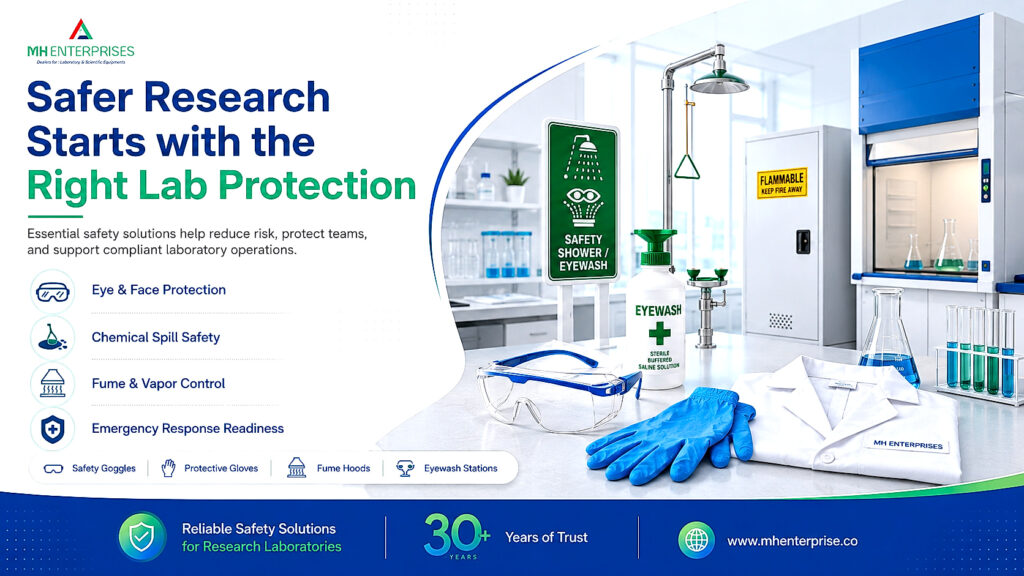
This is why Laboratory Safety Equipment plays a critical role in every research facility. From personal protective equipment to advanced safety systems, these tools help create a secure working environment for laboratory personnel.
As a trusted Laboratory Safety Equipment Supplier, MH Enterprises provides reliable safety solutions designed to help laboratories meet the highest standards of protection and compliance.
Why Laboratory Safety Matters
Laboratories often involve the handling of:
- Hazardous chemicals
- Flammable substances
- Biological agents
- High-temperature equipment
- Pressurized systems
- Electrical instruments
Without proper safety measures, these materials and processes can pose serious risks.
Effective laboratory safety practices help:
Protect Personnel
Safety equipment reduces the risk of injury and exposure.
Prevent Accidents
Protective systems help minimize workplace incidents.
Ensure Regulatory Compliance
Proper safety measures help laboratories meet industry standards.
Protect Valuable Research
Accidents can damage equipment, samples, and experimental data.
Improve Workplace Confidence
A safe laboratory environment allows researchers to work more efficiently and effectively.
Safety is not simply a regulatory requirement—it is an essential component of successful laboratory operations.
Common Laboratory Hazards
Understanding laboratory hazards is the first step toward effective risk management.
Chemical Hazards
Exposure to corrosive, toxic, or flammable chemicals can cause serious injuries.
Examples include:
- Acid spills
- Chemical burns
- Toxic vapor exposure
- Fire hazards
Biological Hazards
Research involving microorganisms and biological materials can present contamination risks.
Potential hazards include:
- Bacterial exposure
- Viral contamination
- Biohazardous waste
Physical Hazards
Laboratories often contain equipment that may cause physical injuries.
Examples include:
- Broken glassware
- Hot surfaces
- Moving mechanical parts
- Electrical systems
Fire Hazards
Many laboratory chemicals are highly flammable.
Without proper safety measures, fires can spread rapidly and cause extensive damage.
Recognizing these hazards helps laboratories implement appropriate safety controls.
Essential Laboratory Safety Equipment
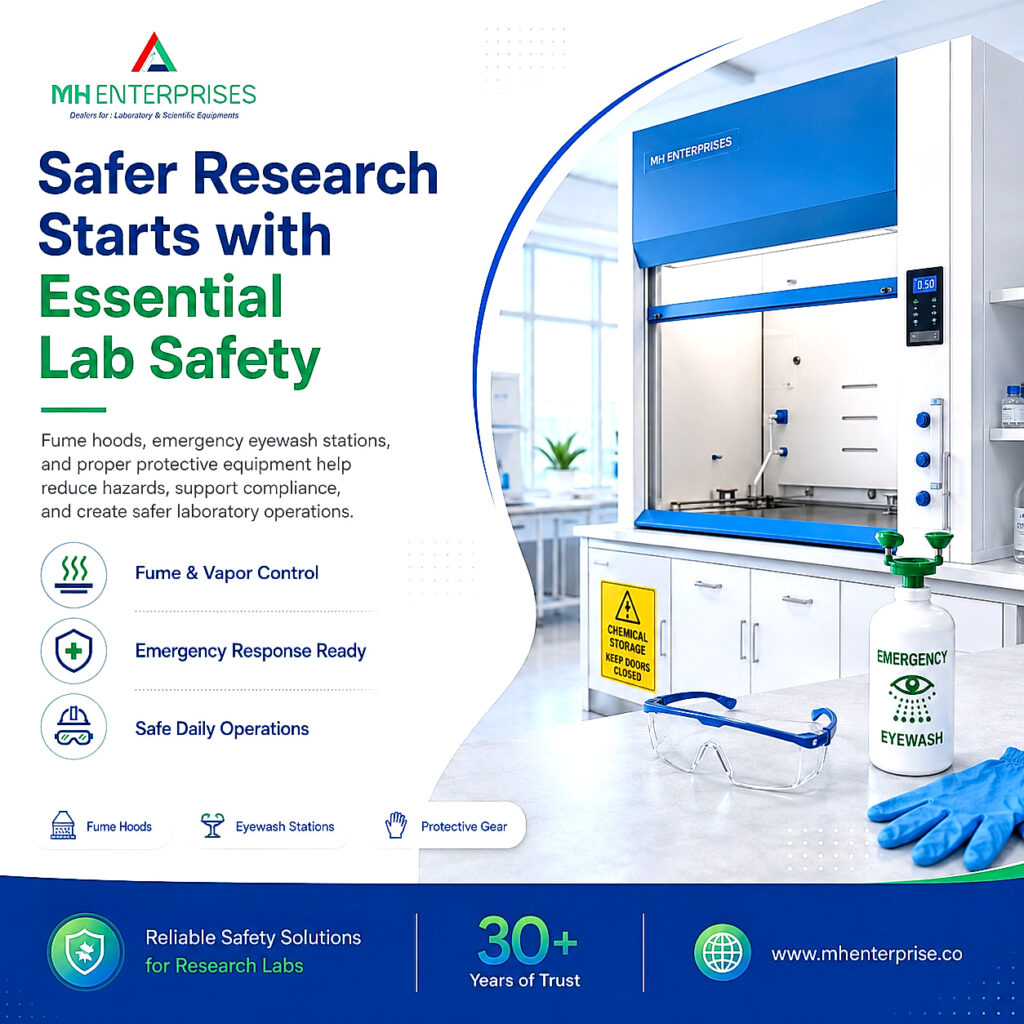
Every research facility should be equipped with appropriate safety devices and protective gear.
Safety Goggles
Eye protection is one of the most basic yet essential safety requirements.
Safety goggles help protect researchers from:
- Chemical splashes
- Flying particles
- Hazardous vapors
Protective Gloves
Different types of gloves are used depending on the application.
They help protect against:
- Chemical exposure
- Biological contamination
- Thermal hazards
Proper glove selection is critical for effective protection.
Laboratory Coats
Lab coats provide an important barrier between hazardous substances and personal clothing.
They also help reduce contamination risks within the laboratory.
Fume Hoods
Fume Hoods are among the most important pieces of laboratory safety equipment.
They help remove:
- Toxic vapors
- Hazardous fumes
- Airborne contaminants
By maintaining controlled airflow, fume hoods significantly reduce inhalation risks.
Fire-Resistant Storage Cabinets
Many laboratories store flammable chemicals and hazardous substances.
Fire-Resistant Cabinets help:
- Reduce fire risks
- Protect stored materials
- Improve regulatory compliance
These cabinets are essential for safe chemical storage.
Emergency Eyewash Stations and Safety Showers
In the event of accidental chemical exposure, immediate decontamination is critical.
Emergency safety stations help minimize injury severity and improve response times.
Real-World Examples of Laboratory Accidents
Many laboratory accidents occur because proper safety equipment is unavailable or not used correctly.
Example 1: Chemical Splash Injury
A researcher handling concentrated acids without appropriate eye protection suffered serious eye damage following a chemical splash.
Proper safety goggles could have prevented the injury entirely.
Example 2: Toxic Fume Exposure
A laboratory technician working without adequate ventilation experienced respiratory irritation due to chemical vapor exposure.
A properly functioning fume hood would have significantly reduced the risk.
Example 3: Chemical Storage Incident
Improper storage of flammable chemicals led to a fire that damaged laboratory equipment and disrupted operations.
Using certified fire-resistant storage cabinets could have minimized the consequences.
These examples demonstrate why proactive safety measures are essential.
Understanding Laboratory Safety Standards
Research facilities must comply with established safety guidelines and industry regulations.
ISO Safety Standards
Many laboratories operate under internationally recognized quality and safety management systems.
These standards help ensure:
- Safe laboratory practices
- Consistent operating procedures
- Effective risk management
OSHA Guidelines
Occupational safety guidelines emphasize:
- Hazard communication
- Employee training
- Personal protective equipment usage
- Emergency preparedness
Compliance helps create safer working environments for laboratory personnel.
Internal Safety Protocols
In addition to external regulations, laboratories should establish:
- Safety training programs
- Emergency response procedures
- Equipment inspection schedules
- Incident reporting systems
A strong safety culture begins with clear procedures and ongoing education.
Best Practices for Laboratory Safety
Laboratories can improve safety by following several key practices.
✔ Wear Appropriate Protective Equipment
Always use required safety gear.
✔ Conduct Regular Safety Inspections
Routine inspections help identify potential hazards.
✔ Store Chemicals Properly
Follow approved storage guidelines for hazardous materials.
✔ Maintain Safety Equipment
Regular testing and maintenance ensure equipment remains effective.
✔ Train Laboratory Personnel
Well-trained staff are better prepared to prevent and respond to emergencies.
✔ Develop Emergency Response Plans
Preparedness reduces response times during critical situations.
Following these practices significantly improves workplace safety.
How MH Enterprises Supports Laboratory Safety
At MH Enterprises, we understand that laboratory safety is fundamental to successful research and testing operations.
As a trusted Laboratory Safety Equipment Supplier, we provide:
- Safety Goggles
- Protective Gloves
- Laboratory Coats
- Fume Hoods
- Fire-Resistant Storage Cabinets
- Emergency Safety Equipment
- Laboratory Safety Solutions
Our products are designed to help laboratories create safer working environments while supporting compliance with industry standards and safety regulations.
We work closely with research facilities, educational institutions, industrial laboratories, and quality control departments to deliver reliable safety solutions tailored to their specific requirements.
Building a Culture of Safety
Effective laboratory safety extends beyond equipment.
Organizations must foster a culture where:
- Safety is prioritized
- Procedures are followed consistently
- Risks are identified proactively
- Continuous improvement is encouraged
When safety becomes part of daily laboratory operations, accidents decrease and productivity improves.
Conclusion
Laboratory safety equipment is a critical investment for every research facility. From protecting personnel and preventing accidents to supporting compliance and operational continuity, safety systems play an essential role in modern laboratory environments.
By implementing proper safety practices and investing in reliable protective equipment, laboratories can create safer, more productive workplaces that support scientific excellence.
MH Enterprises ensures your lab meets the highest safety standards with certified protective equipment. Contact our team today to discover reliable laboratory safety solutions designed to protect your people, your research, and your future.