

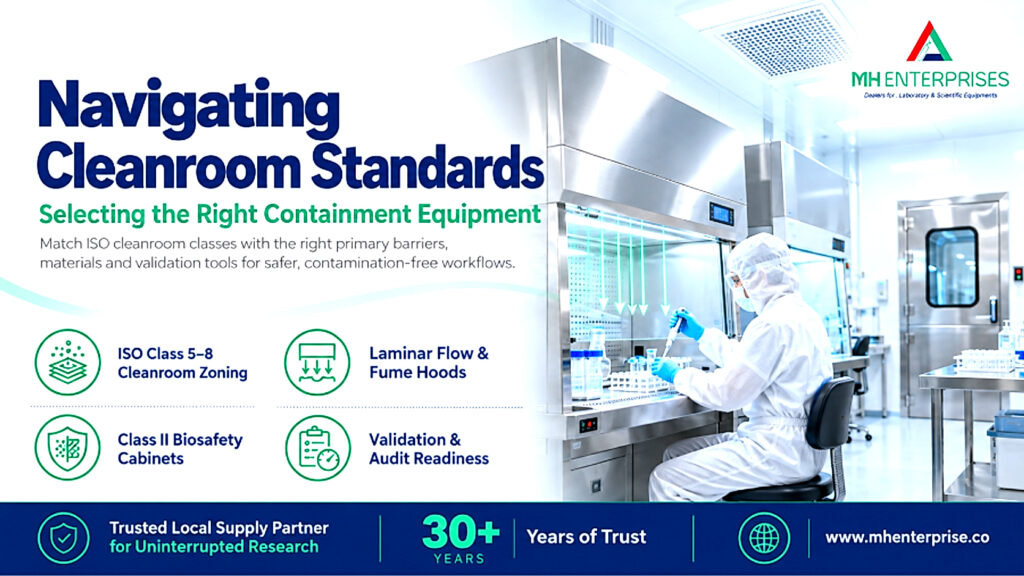
In modern scientific research, biotechnology development, and high-precision pharmaceutical manufacturing, environmental control is a critical baseline, not a secondary operational consideration. A single airborne microparticle, stray microbial spore, or instance of chemical-vapor cross-contamination can ruin months of meticulous experimentation, increase the risk of batch rejections, or compromise personnel safety. As research facilities advance toward higher purity levels, understanding contamination control becomes paramount. Navigating strict regulatory cleanroom standards requires looking beyond standard laboratory furniture to specialized engineering controls. Achieving this level of precision starts with the foundational planning of a new science lab setup.
To maintain the sterile bounds of modern cleanrooms, selecting the right containment infrastructure is essential. Organizations must align room-level air quality standards with the physical barriers designed to isolate volatile or sterile processes.
ISO Cleanroom Classes for Testing and Preparation Labs
Cleanrooms are classified according to the ISO 14644-1 standard, which ranks controlled environments from ISO Class 1 (the cleanest) to ISO Class 9 based on the number of airborne particles present. Most analytical laboratories, sterile preparation facilities, and precision manufacturing spaces operate within the ISO Class 5 to ISO Class 8 range, depending on the level of contamination control required.
Deciphering the Cleanroom Tiers
- ISO 8 (Class 100,000): Often serves as the outer gowning area, raw material airlock, or secondary sample preparation room. Air changes occur roughly 15 to 25 times per hour.
- ISO 7 (Class 10,000): Typically applied to general analytical testing bays, sterile fluid compounding zones, and molecular biology processing rooms.
- ISO 5 (Class 100): Reserved for ultra-critical operations, such as direct aseptic filling, open sample manipulation, or sensitive semiconductor handling.
When implementing a new science lab setup, engineers must carefully map the physical layout according to these classifications. High-purity zones must be protected by cascading air pressure regimes and proper buffer rooms. If an ISO 5 testing bench is placed directly adjacent to an unclassified hallway without pressure barriers, the intended containment airflow may be compromised. Air-handling systems must be explicitly designed to support the specific tier of testing conducted within those spaces.
Choosing Compatible Laminar Flow Cabinets, Fume Hoods, and Biosafety Elements
While room-level HVAC networks handle macro-filtration, localized containment is managed by specific primary barriers. Selecting the right physical hood or cabinet depends on a fundamental question: Are you protecting the sample from the room, protecting the user from the sample, or protecting both simultaneously? Matching operational needs with the right laboratory apparatuses is important for maintaining cleanroom validation.
Laminar Flow Cabinets: Pure Sample Isolation
Laminar flow cabinets are designed strictly for product protection. These units draw ambient air through a HEPA filter, directing a smooth, unidirectional stream of sterile air over the work surface toward the technician. Because the air vents directly into the room, these systems should never be used with hazardous chemicals or biohazardous agents. They are, however, ideal for preparing non-toxic media, electronic components, or sterile medical assemblies.
Fume Hoods: Chemical Vapour Protection
For workflows involving volatile acids, solvents, or toxic compounds, ducted fume hoods are standard. These enclosures draw air away from the researcher, capturing hazardous fumes and venting them through external exhaust ductwork. Because the incoming air is typically unfiltered room air, standard fume hoods do not protect the sample from contamination. They serve strictly as essential science safety equipment designed to preserve worker breathing zones.
Biosafety Cabinets: The Dual-Protection Standard
When handling pathogenic materials, recombinant DNA, or biological hazards, Class II biological safety cabinets are the standard requirement. These advanced laboratory apparatuses use a precise balance of downward, HEPA-filtered airflow to protect the sample and an inward air barrier to prevent pathogens from escaping into the operator’s workspace. All exhaust air passes through HEPA filters before recirculation or discharge from the building, helping to isolate the work from the surrounding environment.
Why Robust Material Builds and Structural Integrity Matter
A cleanroom is only as reliable as the materials used to construct its interior surfaces. Standard particleboards, porous plastics, and mild steels have no place in a controlled containment environment. Over time, friction, humidity, and chemical cleaning agents cause low-grade materials to deteriorate, introducing unwanted particulates directly into the cleanroom atmosphere. To prevent this degradation, selecting high-performance science lab materials is critical.
The Power of Cleanroom-Grade Materials
When evaluating the physical build of containment hoods, transfer hatches, and tables, verify that the surfaces exhibit three critical properties:
- Chemical Inertness: Surfaces must withstand daily, aggressive disinfection protocols using isopropyl alcohol, sodium hypochlorite, or vaporized hydrogen peroxide (VHP) without pitting, rusting, or clouding.
- Monolithic Construction: Enclosures should feature seamless welds and coved internal corners. Sharp internal crevices or exposed screw threads create microscopic accumulation points where dust, moisture, and bacteria can evade cleaning cycles.
- Structural Rigidity: Containment equipment often houses high-speed centrifuges, vortex mixers, or micro-balances. If a laminar flow workbench flexes or vibrates, it can disrupt delicate sample weights, warp airflow curtains, or crack internal filter seals over time.
Investing in cleanroom-grade stainless steel and chemically resistant finishes helps prevent structural breakdown. High-quality physical components ensure that your cleanroom setup retains its structural integrity and containment rating through years of intense operational use.
Integrating Containment Equipment into the Broader Lab Workflow
Selecting individual hoods and benches is only half the battle; these components must function as parts of an integrated system. The physical positioning of containment hardware heavily influences cleanroom aerodynamics and material transit logic.
Streamlining Material Transfers
To prevent cross-contamination during sample movement, facilities often install pass-through boxes in cleanroom walls. These units allow items to move between ISO-classified spaces without requiring technicians to repeatedly cycle through gowning rooms. Advanced pass-through boxes feature electronic interlocks that prevent both doors from opening simultaneously, as well as built-in UV sterilization systems that treat container surfaces during transit.
Managing Air Turbulence Barriers
Every piece of equipment added to a cleanroom alters the room’s air-distribution pattern. Large instruments can obstruct low wall return grilles, creating stagnant zones where airborne contaminants accumulate. When finalizing a science lab setup, engineers must use airflow simulations to confirm that containment hoods do not interfere with ceiling-mounted HEPA diffusers and that cleanroom air continues to flow uniformly downward.
The Compliance Pathway: Validation, Calibration, and Audit Readiness
Operating a cleanroom requires continuous validation. Regulatory bodies and certifying inspectors require proof that your controlled spaces consistently meet their targeted particle count thresholds and pressure baselines.
The Role of Certification Controls
To maintain verified cleanroom status, managers must deploy specialized science safety equipment that monitors environmental indicators in real time. This array typically includes optical particle counters that continuously sample air and log airborne particle concentrations; differential-pressure transducers that track pressure differences between adjacent cleanroom zones; and anemometers and balometers that verify whether fume-hood face velocities meet safety standards.
Preparing for Strict Audits
When inspectors review facility compliance records, they look for documented calibration histories for all primary containment tools. Maintaining comprehensive validation folders for laboratory apparatuses,including filter integrity test records, smoke-trace visualization charts, and velocity profiles, helps make the audit process more transparent and predictable.
Selecting Consumables and Garments for Controlled Spaces
The human element remains the single largest source of contamination inside any cleanroom. Even with ideal engineering controls, skin cells, clothing fibers, and hair can overwhelm filtration systems if personnel are not appropriately outfitted with cleanroom garments and accessories.
Minimizing the Human Footprint
All protective apparel used inside cleanrooms must be composed of specialized lint-free synthetic textiles that trap skin particulates without shedding fibres. Gowning protocols scale directly with the room’s classification. ISO 8 zones require basic lab coats, bouffant caps, and clean shoe covers, while ISO 7 zones mandate dedicated frocks and beard covers. For ultra-sensitive ISO 5 environments, full sterile coveralls, hoods, integrated boots, face masks, and double-gloving layers are required.
Sourcing Cleanroom-Safe Supplies
Beyond personnel apparel, everyday operational supplies must meet cleanroom criteria. Standard wood-pulp notebooks, paper forms, and ink pens shed thousands of microparticles during use. Facilities must use specialized science lab materials, including synthetic cleanroom paper, antistatic plastic clipboards, and lint-free wipes, to prevent debris from entering controlled testing environments.
Strategic Advantages of Optimizing Containment Engineering
Upgrading your containment infrastructure involves a significant capital commitment, but the long-term operational advantages extend across the entire organization:
Minimized Product Losses: Maintaining flawless containment environments dramatically reduces batch failures, sample contamination events, and out-of-specification occurrences, saving thousands of dollars in ruined ingredients.
Enhanced Personnel Safety: High-performance biological safety cabinets and ducted fume hoods help protect researchers from hazardous vapours and biological agents when the equipment is selected, installed, and operated correctly.
Sustained Operational Longevity: Choosing robust, non-corrosive structural hardware ensures that your cleanroom infrastructure functions reliably for decades without disruptive shutdowns for refitting.
Ultimately, standardizing high-quality containment hardware creates a corporate culture centered around precision and safety, giving research teams total confidence in their daily scientific data.
Partnering for Cleanroom Compliance
At MH Enterprises, we understand that cleanroom performance depends on the right combination of compliant equipment, reliable instruments, and ongoing technical support. Relying on non-cleanroom-grade infrastructure within controlled spaces can increase the risk of contamination, downtime, and compliance issues.
We support laboratories with high-performance laboratory testing equipment, cleanroom-compatible instruments, contamination monitoring solutions, and validation support. Our technical consultants work closely with cleanroom operators to analyze facility workflows, source compatible laboratory apparatuses, and deliver the long-lasting science lab materials required to keep your controlled environments verified and operational.
Choosing the right equipment, materials, and monitoring tools can help strengthen cleanroom validation, improve workflow reliability, and support long-term compliance. Work with MH Enterprises to source reliable laboratory equipment and cleanroom-compatible solutions that support safer, more controlled workflows.