

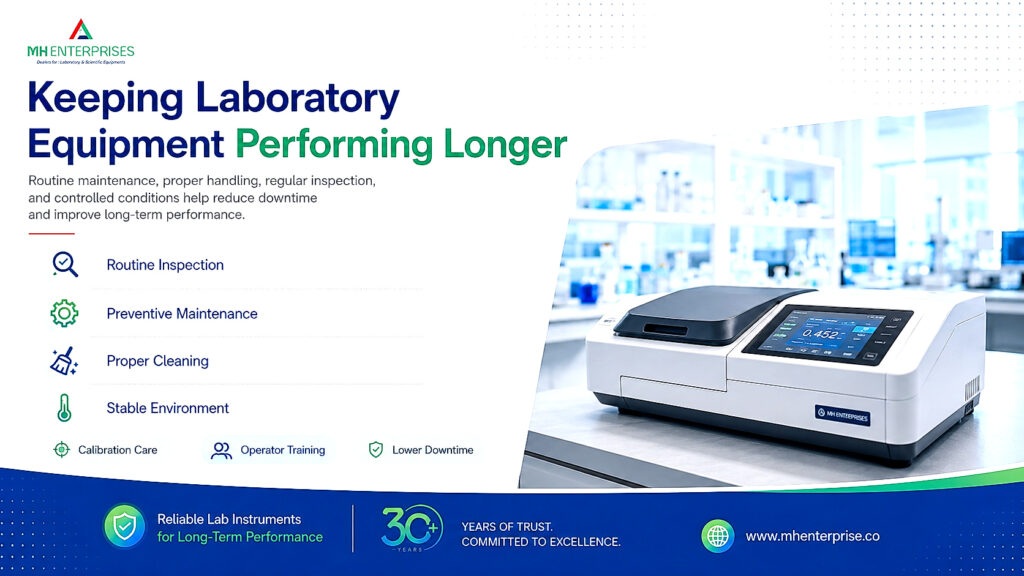
Laboratory Equipment Is an Investment Worth Protecting
Modern laboratories depend on a wide range of instruments to perform accurate testing, research, and quality control activities. From analytical balances and spectrophotometers to incubators and testing equipment, laboratory instruments represent a significant investment for any organization.
However, even the most advanced equipment can experience performance issues if it is not handled and maintained correctly. Improper usage, poor storage conditions, and neglecting routine maintenance can shorten equipment lifespan, increase repair costs, and affect testing accuracy.
The good news is that with proper care and preventive maintenance, laboratories can significantly extend the life of their equipment while maintaining optimal performance.
As a trusted Laboratory Equipment Supplier, MH Enterprises helps laboratories maximize the value of their investments through quality equipment and practical maintenance guidance.
Why Equipment Longevity Matters
Laboratory equipment is designed for precision and reliability. When instruments are properly maintained, they continue to deliver accurate results for many years.
Extending equipment lifespan offers several benefits:
Reduced Replacement Costs
Well-maintained instruments require fewer replacements.
Improved Accuracy
Properly functioning equipment provides reliable analytical results.
Lower Maintenance Expenses
Preventive maintenance helps avoid major repairs.
Increased Productivity
Reliable equipment reduces downtime and operational disruptions.
Better Return on Investment
Longer equipment life maximizes the value of laboratory purchases.
For laboratories operating under budget constraints, extending equipment life is both a financial and operational advantage.
Common Factors That Reduce Equipment Lifespan
Many equipment failures occur due to preventable issues.
Poor Maintenance Practices
Ignoring routine servicing can lead to performance deterioration.
Improper Handling
Incorrect usage increases the risk of damage.
Environmental Conditions
Dust, humidity, and temperature fluctuations can affect sensitive instruments.
Overloading Equipment
Operating beyond recommended limits can reduce equipment lifespan.
Lack of Staff Training
Untrained personnel may unknowingly misuse instruments.
Understanding these factors is the first step toward preventing unnecessary wear and tear.
Best Practices for Maintaining Laboratory Equipment
Regular maintenance is essential for preserving equipment performance.
Follow Manufacturer Guidelines
Always operate and maintain equipment according to manufacturer recommendations.
These guidelines are designed to ensure safe operation and optimal performance.
Perform Routine Inspections
Regular inspections help identify potential issues before they become serious problems.
Check for:
- Loose connections
- Damaged components
- Unusual noises
- Calibration issues
- Signs of wear
Early detection often prevents costly repairs.
Schedule Preventive Maintenance
Waiting until equipment fails can result in expensive downtime.
Preventive maintenance programs help laboratories:
- Reduce breakdowns
- Improve reliability
- Extend equipment lifespan
- Maintain testing accuracy
Preventive maintenance is one of the most effective ways to protect laboratory investments.
Keep Equipment Clean
Dust, chemical residues, and contaminants can negatively affect instrument performance.
Cleaning should be performed according to manufacturer recommendations using approved materials.
Regular cleaning helps:
- Improve accuracy
- Prevent contamination
- Reduce wear
- Enhance reliability
Environmental Controls That Protect Laboratory Equipment
Environmental conditions play a significant role in equipment longevity.
Temperature Control
Extreme temperature fluctuations can affect instrument performance.
Maintain stable laboratory temperatures whenever possible.
Humidity Control
Excess humidity may damage sensitive electronic components and promote corrosion.
Using proper ventilation and humidity control systems helps protect laboratory instruments.
Dust Prevention
Dust accumulation can interfere with mechanical and electronic components.
Keep laboratory spaces clean and store equipment appropriately when not in use.
Proper Ventilation
Adequate airflow helps maintain stable operating conditions and prevents overheating.
Good ventilation contributes to both equipment performance and laboratory safety.
These environmental controls are especially important for sensitive analytical instruments.
Equipment Handling: Do’s and Don’ts
Proper handling significantly affects equipment lifespan.
✅ Do’s
Use Equipment as Intended
Always operate instruments according to manufacturer specifications.
Train Laboratory Personnel
Ensure staff understand proper operating procedures.
Calibrate Equipment Regularly
Routine calibration supports measurement accuracy.
Maintain Service Records
Document inspections, maintenance, and repairs.
Store Equipment Properly
Protect instruments from dust, moisture, and physical damage.
❌ Don’ts
Do Not Overload Equipment
Exceeding operating limits can damage critical components.
Do Not Ignore Warning Signs
Unusual sounds or inconsistent readings should be investigated immediately.
Do Not Skip Maintenance
Delaying service can lead to larger and more expensive problems.
Do Not Use Improper Cleaning Materials
Incorrect cleaning products may damage sensitive surfaces.
Do Not Allow Untrained Personnel to Operate Equipment
Improper operation is a common cause of equipment failure.
Following these simple practices can dramatically improve equipment lifespan.
The Importance of Calibration
Calibration is essential for maintaining measurement accuracy.
Regular calibration helps:
- Ensure reliable results
- Support regulatory compliance
- Improve testing consistency
- Identify performance issues early
Many laboratories establish calibration schedules to maintain quality standards and equipment reliability.
Neglecting calibration can compromise both equipment performance and analytical results.
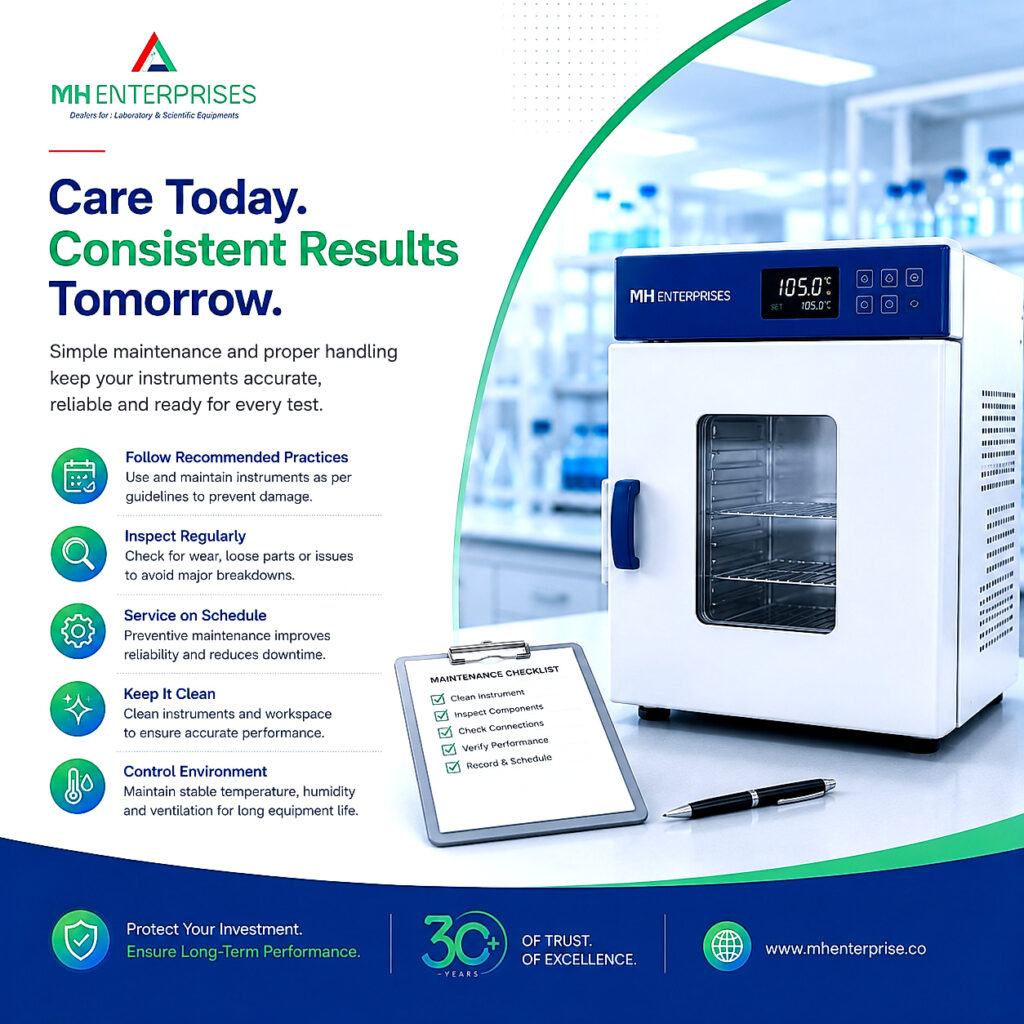
Creating a Laboratory Maintenance Checklist
A structured maintenance program helps laboratories stay organized.
Daily Tasks
- Visual inspection
- Cleaning work surfaces
- Checking operating conditions
Weekly Tasks
- Equipment performance checks
- Verification of calibration status
- Cleaning filters and vents
Monthly Tasks
- Detailed inspections
- Maintenance record updates
- Review of operating procedures
Annual Tasks
- Professional servicing
- Comprehensive calibration
- Preventive maintenance review
Using a maintenance checklist helps ensure that critical tasks are not overlooked.
How MH Enterprises Helps Laboratories Protect Their Equipment
At MH Enterprises, we believe that laboratory success depends on both quality equipment and proper maintenance practices.
As a trusted Laboratory Equipment Supplier, we provide:
- Reliable laboratory instruments
- Technical guidance
- Preventive maintenance recommendations
- Calibration support
- Long-term customer assistance
Our goal is to help laboratories maximize equipment performance, reduce downtime, and achieve long-term operational success.
When Should You Consider Replacing Equipment?
Even with excellent maintenance, every instrument eventually reaches the end of its service life.
Signs that replacement may be necessary include:
- Frequent breakdowns
- High repair costs
- Reduced accuracy
- Obsolete technology
- Limited manufacturer support
Evaluating equipment performance regularly helps laboratories make informed replacement decisions.
Conclusion
Laboratory equipment is one of the most valuable assets in any scientific or industrial facility. Protecting that investment requires proper handling, preventive maintenance, environmental control, and regular calibration.
By following established best practices and implementing a structured maintenance program, laboratories can significantly extend equipment lifespan while maintaining accuracy and efficiency.
Extend the life of your lab instruments with MH Enterprises’ guidance. Contact our team today for expert advice, quality equipment, and long-term laboratory support solutions.